Long before Colombo or Kandy rose to prominence, Sri Lanka was ruled from the plains of the dry zone, where kings built vast reservoirs, soaring stupas and elegant palaces. The Anuradhapura and Polonnaruwa ancient cities, the island's two great early capitals, preserve the story of those civilisations on a scale that still astonishes, and both are recognised as UNESCO World Heritage Sites.
Visiting them is less about ticking off monuments than about reading a landscape. Sacred trees, moonstones worn smooth by centuries of bare feet and colossal granite Buddhas sit among forest, lakes and rice fields. With a little context and an unhurried pace, a day in each city becomes one of the most rewarding experiences Sri Lanka has to offer.
Anuradhapura, the First Great Capital
Anuradhapura served as the island's capital for well over a thousand years, from around the 4th century BC until the early 11th century AD. It became one of the great centres of Theravada Buddhism, and unlike many ancient sites it remains very much alive, with pilgrims dressed in white making their way between the shrines at dawn and dusk.
The heart of the city is the Jaya Sri Maha Bodhi, a sacred fig tree grown from a cutting of the tree under which the Buddha attained enlightenment. It was brought to the island in the 3rd century BC and is widely regarded as one of the oldest documented human-planted trees in the world. Nearby, the gleaming white dome of the Ruwanwelisaya, built by King Dutugemunu in the 2nd century BC, draws worshippers throughout the day.
The Great Stupas and Monasteries
Anuradhapura's scale becomes clear among its great monasteries. The Jetavanaramaya was once among the tallest structures in the ancient world, built from millions of bricks, while the Abhayagiri complex was a major centre of learning with its own dagoba, ponds and guardstones. The Thuparamaya is traditionally considered the first stupa built on the island after the arrival of Buddhism.
Look out, too, for the serene Samadhi Buddha seated in meditation, the carved lovers at Isurumuniya rock temple, and the beautifully engineered Twin Ponds, known as Kuttam Pokuna. Just east of the city, Mihintale is revered as the place where Buddhism was introduced to Sri Lanka, and its hilltop offers sweeping views across the plains.
Polonnaruwa, the Medieval Royal City
After Anuradhapura fell in the early 11th century, the capital moved south-east to Polonnaruwa, which flourished until the 13th century. More compact and easier to explore, it is often the favourite of first-time visitors. Its golden age came under King Parakramabahu I, who built the enormous reservoir known as the Parakrama Samudra, still shimmering beside the city today.
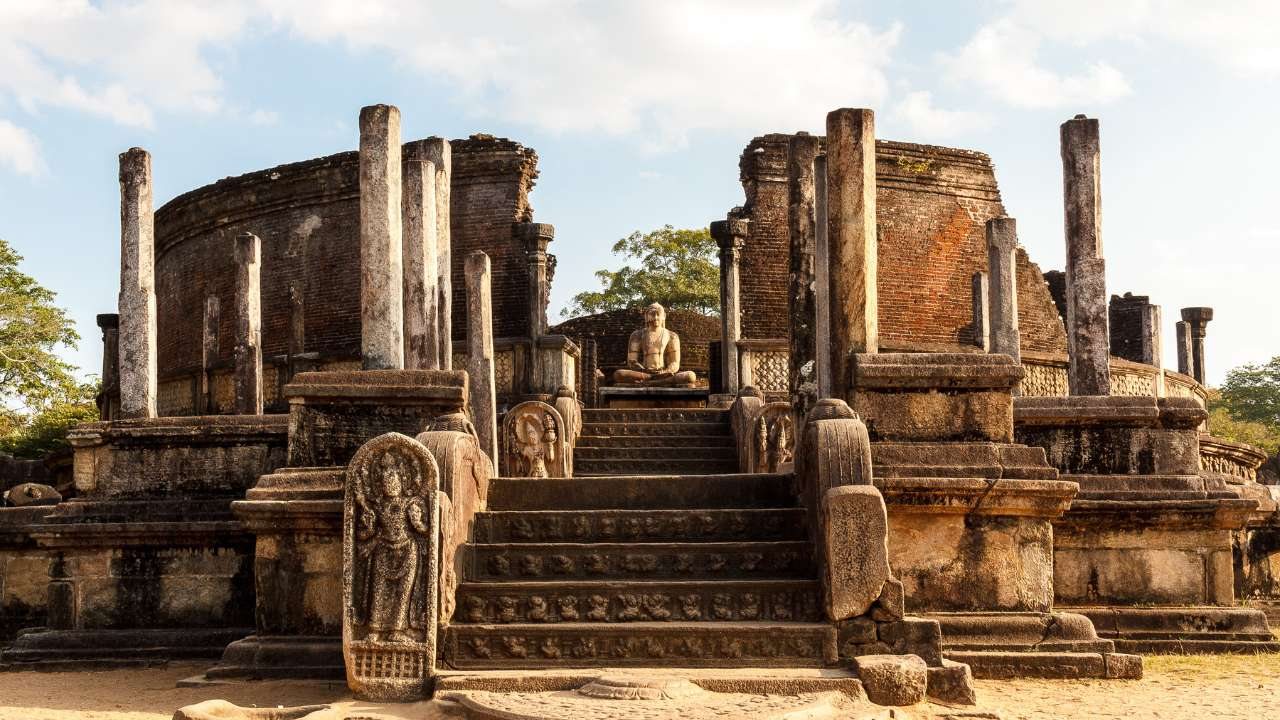
Within the old citadel stand the remains of the Royal Palace, once said to have risen several storeys, and the Council Chamber with its carved elephants and lions. The Quadrangle, a raised sacred precinct, holds some of the finest buildings on the island, including the circular Vatadage with its stone staircases, moonstones and seated Buddhas.
The Gal Vihara and Beyond
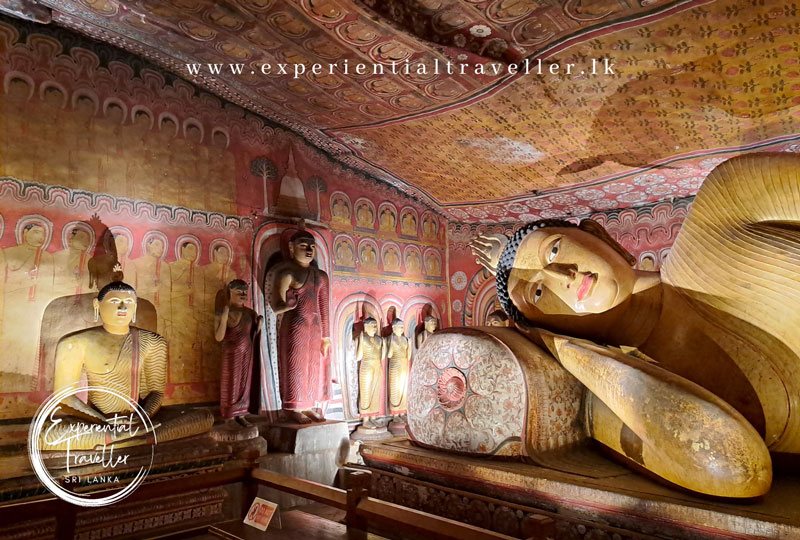
Polonnaruwa's crowning glory is the Gal Vihara, where four Buddha images are carved from a single granite face. The standing figure and the great reclining Buddha, peaceful and perfectly proportioned, are among the most celebrated works of Sinhalese sculpture. This is a place of worship, so visitors are expected to behave quietly and respectfully.
Further north, the towering brick walls of the Lankatilaka image house and the huge Rankoth Vehera and Kiri Vehera stupas complete a circuit that is easily managed in a day, ideally by bicycle or with a private vehicle between the main clusters.
Tips for the Anuradhapura and Polonnaruwa Ancient Cities
Both cities are spread out and often hot, so a little planning pays off. These tips will help you get the most from your time.
- Start at Dawn: Begin as early as possible to enjoy softer light, cooler temperatures and the atmosphere of morning worship.
- Dress Respectfully: Cover shoulders and knees, and remove shoes and hats at sacred sites, carrying socks for hot stone.
- Hire a Guide: The ruins make far more sense with a licensed guide who can explain the history, symbolism and chronology.
- Take Your Time: Allow a full day for each city rather than trying to rush both in one day.
- Stay Hydrated: Carry water, sun cream and a hat, and plan a long lunch break in the hottest hours.
- Check Current Fees: Entry arrangements can change, so check current fees and ticketing before you go.
When to Visit
The ancient cities lie in the dry zone, which is generally at its driest during the south-west monsoon from roughly May to September, although this is also the hottest period. The north-east monsoon, from around October or November to February or March, brings more rain to this part of the island, and inter-monsoon showers are common around October and November. Rain here tends to come in bursts rather than lasting all day, so early starts remain the best approach year-round.
Weaving Them Into a Wider Journey
The Anuradhapura and Polonnaruwa ancient cities sit naturally within the Cultural Triangle alongside Sigiriya and Dambulla. Polonnaruwa is especially close to the national parks of Minneriya and Kaudulla, where the dry-season elephant gathering, roughly July to October and peaking around August and September, is one of Asia's great wildlife spectacles. Hurulu Eco Park is another option nearby, and an afternoon safari makes an ideal counterpoint to a morning among the ruins.
With Experiential Traveller, the Anuradhapura and Polonnaruwa ancient cities can be explored as part of a Leisure and Heritage tour, or combined with Sigiriya and Dambulla on the three-night Dambulla and Central Triangle experience. Travelling privately with an air-conditioned vehicle, a professional driver and a licensed English-speaking guide, and using the Build Your Own planner to add a safari or a quiet morning at Mihintale, you can explore these extraordinary places at a slow pace that lets their history sink in.
Travel like this
Ashan can build the places in this story into a private, slow-paced journey — with a driver, a licensed guide and stays chosen for each region.

About the author
Ashan Wijetilleke
Founder of Experiential Traveller and a licensed National Tourist Guide, based in Colombo.
About Ashan