
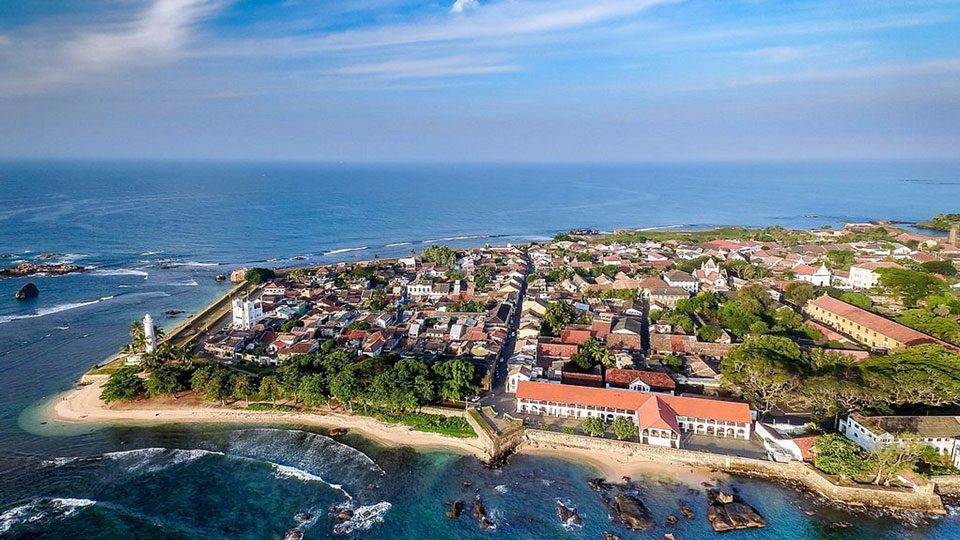
Few places in Sri Lanka reward slow exploration quite like Galle Fort. Encircled by massive stone ramparts on a headland above the Indian Ocean, this living town of churches, mosques, merchant houses and quiet shaded lanes is best discovered on foot, and this Galle Fort walking guide will help you make the most of a morning, an afternoon or a whole day inside its walls.
First fortified by the Portuguese in the late 16th century and greatly expanded by the Dutch from the mid-17th century, the fort is recognised as a UNESCO World Heritage Site and is one of the best-preserved European-built fortified towns in South and South-East Asia. Yet it is far from a museum piece. Families still live here, children walk to school along the ramparts and fishermen sell their catch nearby, which gives the old town a character all its own.
A Short History of Galle Fort
Galle was an important harbour long before Europeans arrived, visited by traders from across the Indian Ocean. The Portuguese built the first defences in the late 16th century, but it was the Dutch East India Company, taking the town in 1640, who transformed it into the formidable fortress seen today, with thick granite and coral walls and a series of bastions guarding the harbour. The British took control at the end of the 18th century and added their own touches, including the main gate in the northern ramparts and, later, the lighthouse and clock tower.
Walking the Ramparts
The best introduction to the fort is a slow circuit of the ramparts, which takes around an hour or so at an easy pace, longer if you stop often. Starting near the main gate, the walls lead past the Sun, Moon and Star bastions, which face inland and once formed the main line of defence. From here, the path curves around the seaward side of the fort with the ocean breaking on the rocks below.
Heading south, you reach Flag Rock, a former Portuguese bastion and one of the most popular spots to watch the sunset. Continue east to the lighthouse and Point Utrecht Bastion, where the walls turn back towards the harbour and the old gate. On the far side, the Old Gate still bears the coat of arms of the Dutch East India Company, dated 1669, beneath the British emblem added later.
Exploring the Streets Within
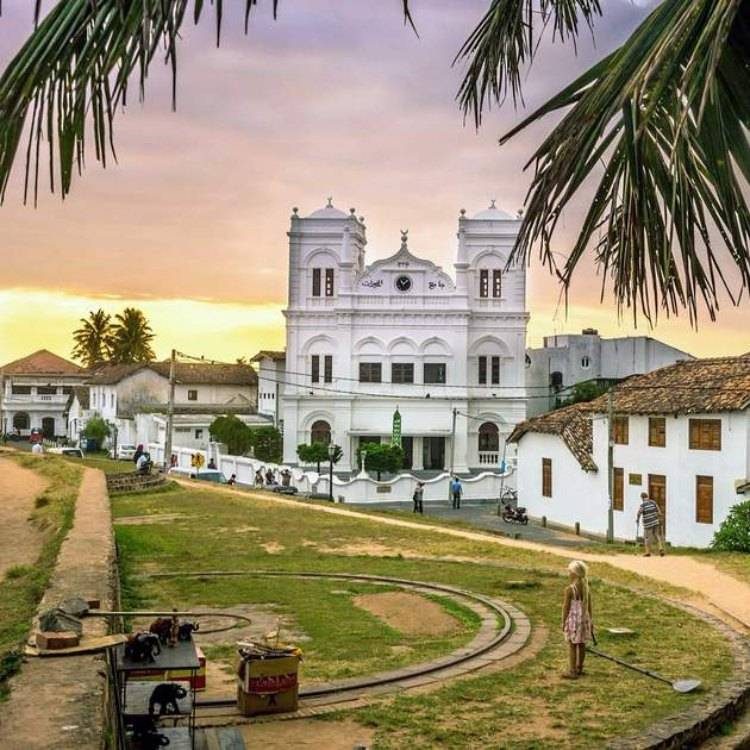
Inside the walls, the fort is laid out on a neat grid of streets, and wandering them without a fixed plan is part of the pleasure. Church Street is home to the Dutch Reformed Church, dating from the mid-18th century, with its gravestones set into the floor, as well as the Anglican All Saints Church. Nearby, the white Meeran Mosque stands close to the lighthouse, a reminder of the fort's long-established Muslim community.
Pedlar Street, Lighthouse Street and Leyn Baan Street are lined with restored colonial villas, verandas and courtyard houses, many now home to cafés, galleries, boutiques and craft workshops. The Old Dutch Hospital, a long colonnaded building near the ramparts, has been restored and now houses shops and restaurants with views out to sea.
A Suggested Walking Route
For a first visit, this Galle Fort walking guide suggests a simple loop. Enter through the main gate and climb onto the northern ramparts, then follow the walls clockwise past the bastions to Flag Rock and the lighthouse. Drop down into the grid of streets near the Meeran Mosque, wander along Church Street to the Dutch Reformed Church, and finish at the Old Gate or the Old Dutch Hospital. Time your walk so you return to the ramparts in the late afternoon, when the stone glows in the low light and locals gather to watch the sunset.
Galle Fort Walking Guide Essentials
A little preparation makes a big difference to comfort, especially in the heat of the middle of the day. Keep these tips in mind.
- Walk Early or Late: Mornings and late afternoons are cooler, quieter and better for photography than the hours around midday.
- Wear Comfortable Shoes: The ramparts are uneven in places, with steps, slopes and worn stone underfoot.
- Carry Water: There is little shade on the walls, so bring water, a hat and sun protection.
- Dress Respectfully: Cover shoulders and knees when entering churches, the mosque or other places of worship.
- Mind the Edges: Some sections of the ramparts have no railings, so take care, particularly with children.
- Check Opening Details: Some churches, museums and sites have varied opening arrangements, so check current details before you go.
When to Visit Galle
Galle sits on the south-west coast, which is generally at its best from around December to April, when the seas are calmer and the skies are often clear. The south-west monsoon, roughly May to September, brings more rain and rougher seas to this stretch of coast, and inter-monsoon showers are common around October and November. The fort can still be enjoyed in the wetter months, as showers often pass quickly and the streets take on a quieter, more reflective mood.
Beyond the Fort
Galle makes an excellent base for exploring the wider south coast, with its beaches, fishing villages and tea estates in the hills inland. A Galle Fort walk pairs naturally with slower days by the sea, and the region is within reach of Yala and Bundala for those who want to add wildlife to the journey.


Experiential Traveller includes Galle Fort walks within its three-night South Coast experience and its Leisure and Heritage tours, travelling privately with an air-conditioned vehicle, a professional driver and a licensed English-speaking guide who can bring the fort's layered history to life. You can also use the Build Your Own planner to combine the fort with a tea plantation visit, a safari at Yala or Bundala, or simply more unhurried time on the coast, travelling at the slow pace that suits Galle so well.
Travel like this
Ashan can build the places in this story into a private, slow-paced journey — with a driver, a licensed guide and stays chosen for each region.

About the author
Ashan Wijetilleke
Founder of Experiential Traveller and a licensed National Tourist Guide, based in Colombo.
About Ashan