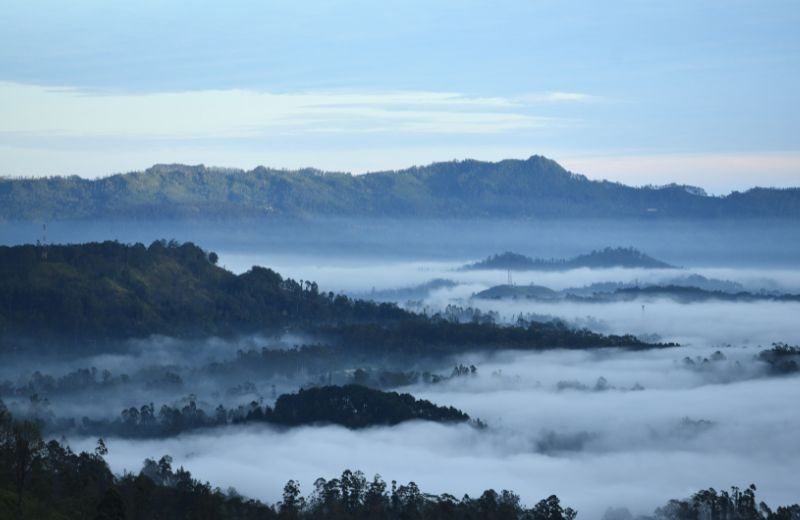
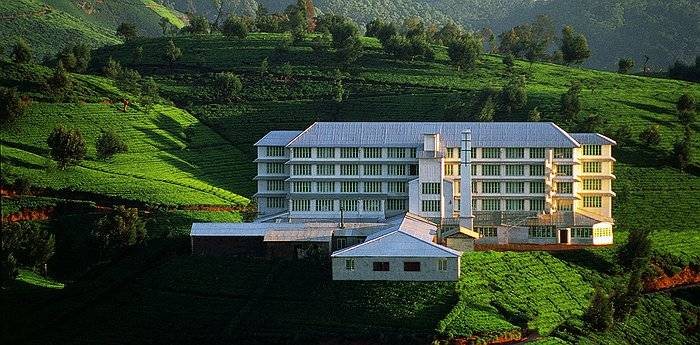
Drive up into Nuwara Eliya tea country and the island changes character entirely. The heat of the lowlands gives way to cool, clear air, the roads wind through hillsides combed with emerald tea bushes, and the scent of eucalyptus drifts through open windows. Waterfalls spill from the ridges, and in the early morning mist lies thick in the valleys.
At roughly 1,800 to 1,900 metres above sea level, Nuwara Eliya is one of the highest towns in Sri Lanka and the heart of its high-grown tea region. Its colonial past lingers in red-brick post offices, mock-Tudor bungalows and neatly kept gardens, earning it the nickname Little England. Yet the real draw lies beyond the town, on the estates whose teas are prized around the world.
A Brief History of Ceylon Tea
Tea was not Sri Lanka's first great plantation crop. In the nineteenth century the hills were planted with coffee, until a devastating leaf disease swept through the estates from the late 1860s onwards. Planters turned to tea, and a Scot named James Taylor is widely credited with establishing the first commercial tea plantation, at Loolecondera near Kandy, around 1867.
Within a few decades tea had transformed the hill country. Estates spread across the highlands, factories and bungalows were built on the ridges, and Ceylon tea became a name known across the globe. Many of the families who work the estates today are descended from Tamil labourers brought from southern India during the colonial period, and their culture is an integral part of the hill country.
Why High-Grown Tea Is Special
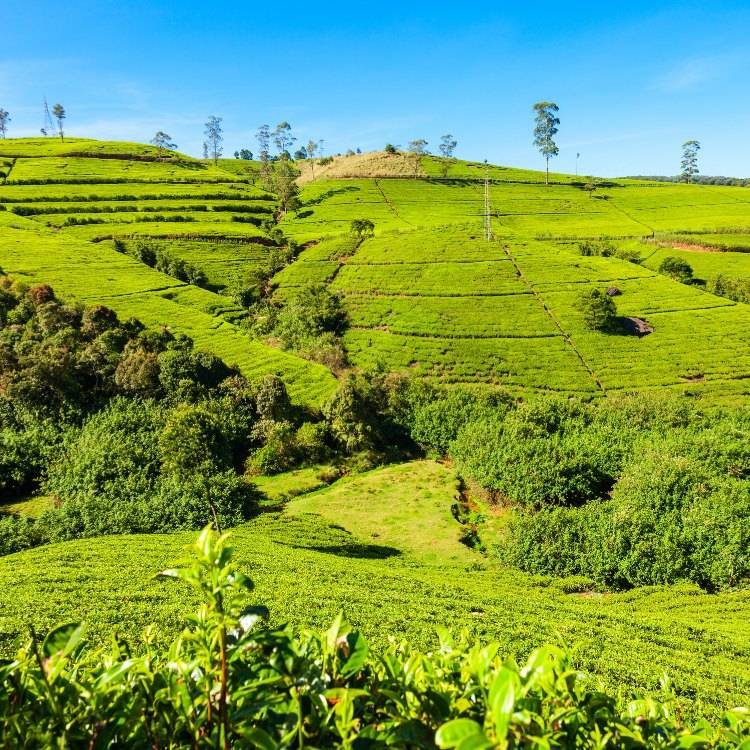
Tea from Sri Lanka is often grouped by altitude, and the teas of the Nuwara Eliya district are among the highest grown on the island. The cool temperatures and misty conditions slow the growth of the leaf, which is generally said to produce a lighter, brighter and more delicate cup than teas from lower elevations.
Tasting a fresh high-grown tea in the place it was grown is a quiet revelation. Many visitors find that it bears little resemblance to the tea bags they drink at home, and a tasting session is one of the most memorable parts of exploring Nuwara Eliya tea country.
Visiting a Tea Plantation and Factory
A tea plantation visit usually begins in the fields, where pluckers move along the slopes gathering the classic two leaves and a bud by hand. The leaf is then carried to the factory, where it goes through a series of stages. It is withered to reduce its moisture, rolled to break the leaf and release its juices, left to oxidise, then dried and sorted into grades.
Many factories still use machinery dating back decades, and the rhythmic clatter of rollers and sorting tables, together with the rich smell of drying leaf, makes for an atmospheric visit. Most tours end with a tasting, and some estates have tea rooms with sweeping views over the plantations. Check current visiting arrangements before you go, as they vary from estate to estate.
Exploring Nuwara Eliya Town
The town itself rewards a gentle wander. Gregory Lake, on the edge of town, is a pleasant spot for a stroll or a boat ride, and Victoria Park is known for its flowerbeds and birdlife. The old colonial buildings, from the post office to the hill-club style hotels, give the town a character all of its own.
Nearby, the Hakgala Botanical Garden climbs a steep hillside with collections of roses, ferns and montane trees, while Pidurutalagala, Sri Lanka's highest mountain at around 2,500 metres, rises just behind the town. Horton Plains, with its famous World's End viewpoint, is within easy reach for an early morning hike.
Tips for Exploring Tea Country
- Bring Warm Layers: evenings and early mornings can be distinctly chilly, so pack a fleece or jumper.
- Go Early: mornings are often clearer, and plucking is usually under way in the fields well before midday.
- Ask Before Photographing: tea pluckers are working, so always ask permission before taking pictures.
- Taste Different Grades: try a range of teas at tastings to appreciate how grade and altitude affect flavour.
- Allow Time: winding roads make journeys slower than distances suggest, so do not over-plan your days.
When to Visit Nuwara Eliya Tea Country
Tea is harvested throughout the year, so there is no bad time to see the estates at work. The drier months, roughly January to April, often bring the clearest skies, while the south-west monsoon, around May to September, tends to bring more rain and mist to these western-facing hills. The inter-monsoon period around October and November can also be wet.
April is a particularly lively month in town, when the season around the Sinhala and Tamil New Year brings visitors from across the island. Whatever the month, pack for rain, since showers in the highlands can arrive at any time.
Getting There and Moving On
Nuwara Eliya is usually reached by road from Kandy or Colombo, a scenic drive through tea estates and past waterfalls. The nearest railway station is Nanu Oya, a short drive from town, which makes Nuwara Eliya a natural starting point for the scenic train ride to Ella. Check current timetables before travelling.
Discovering Tea Country with Experiential Traveller

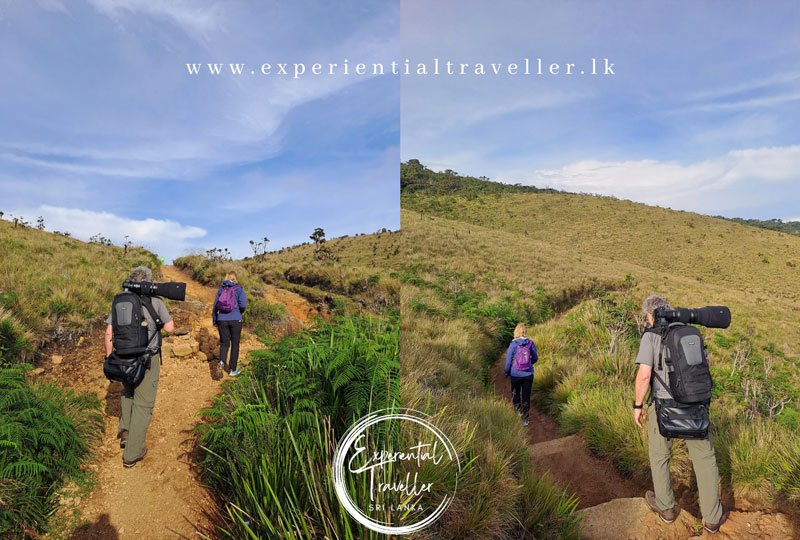
Tea plantation visits are one of the experiences Experiential Traveller can include in a private, slow-paced journey, with a licensed English-speaking guide to explain the history and craft of Ceylon tea. Travelling in an air-conditioned vehicle with a professional driver, you can linger in Nuwara Eliya tea country, stay in a boutique hotel or villa on a half-board basis, and continue by train from Nanu Oya to Ella. It fits naturally within the Leisure & Heritage tour, or you can plan your own highland route with the Build Your Own journey planner.
Travel like this
Ashan can build the places in this story into a private, slow-paced journey — with a driver, a licensed guide and stays chosen for each region.

About the author
Ashan Wijetilleke
Founder of Experiential Traveller and a licensed National Tourist Guide, based in Colombo.
About Ashan